Can a Small Commercial Unit Work as a Restaurant? Gracie’s Hampstead by Common Ground Workshop
Can a compact, commercially awkward unit on a prestigious high street actually work as a luxury restaurant?
Common Ground Workshop’s answer, at Gracie’s Hampstead, is yes – and the project is a case study in what that requires.
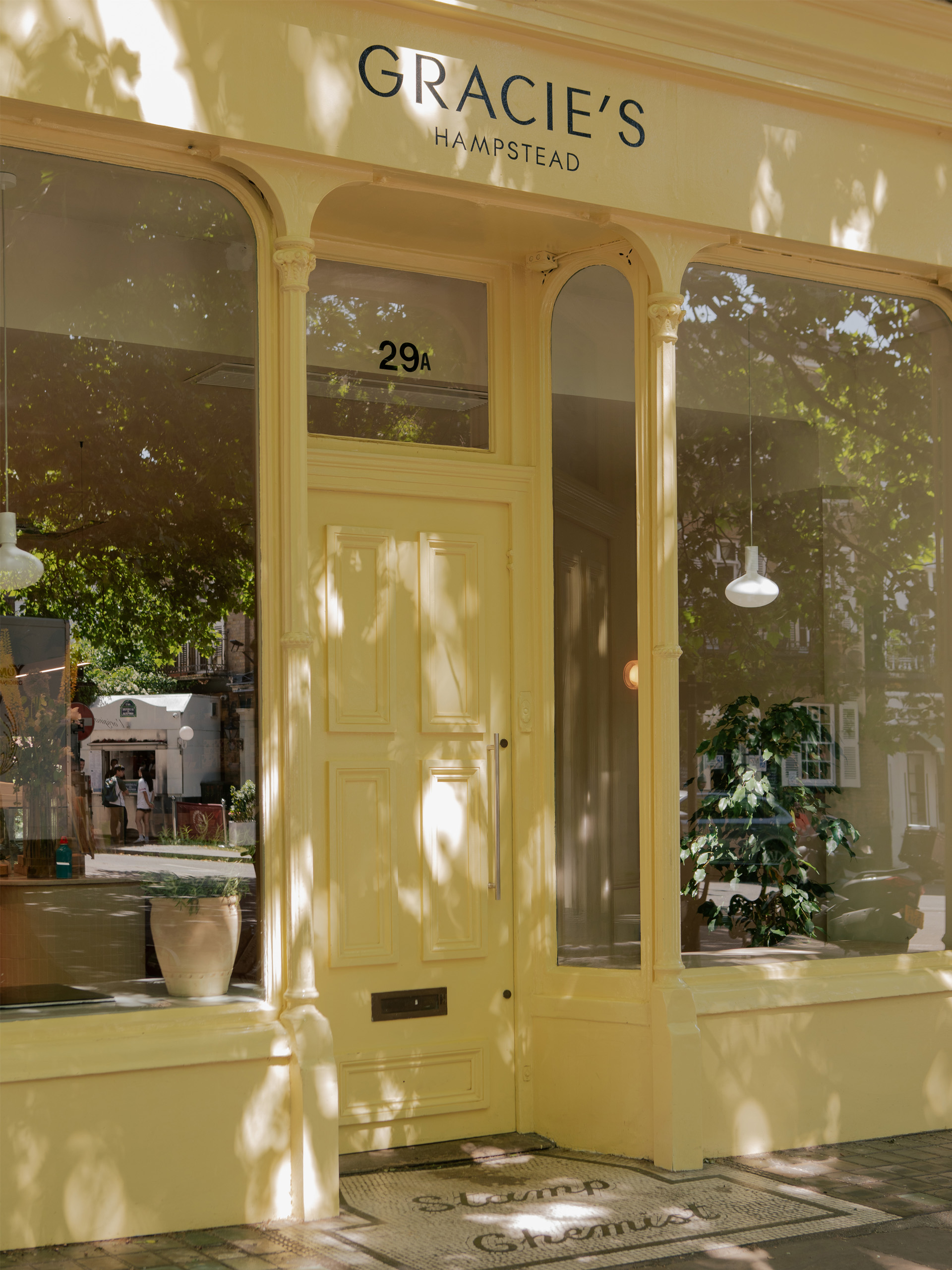
The unit at 29 Hampstead High Street presented a genuine commercial question. Compact, over two levels, fronting one of London’s most sought-after high streets: the pressure on every square meter to perform across multiple functions simultaneously – daytime cafe, specialty retail, evening restaurant and bar – was acute. Most operators would have revised the brief. Common Ground Workshop revised the approach instead.
The constraint was never the problem
Hospitality spaces get written off for the wrong reasons. A unit that reads as commercially marginal on paper can perform well if the brief is calibrated correctly – if the spatial strategy, the operational model and the design language are resolved together rather than independently. At Gracie’s Hampstead, Common Ground Workshop worked with hospitality client Culinary Grace to establish that brief before a single design decision was made.
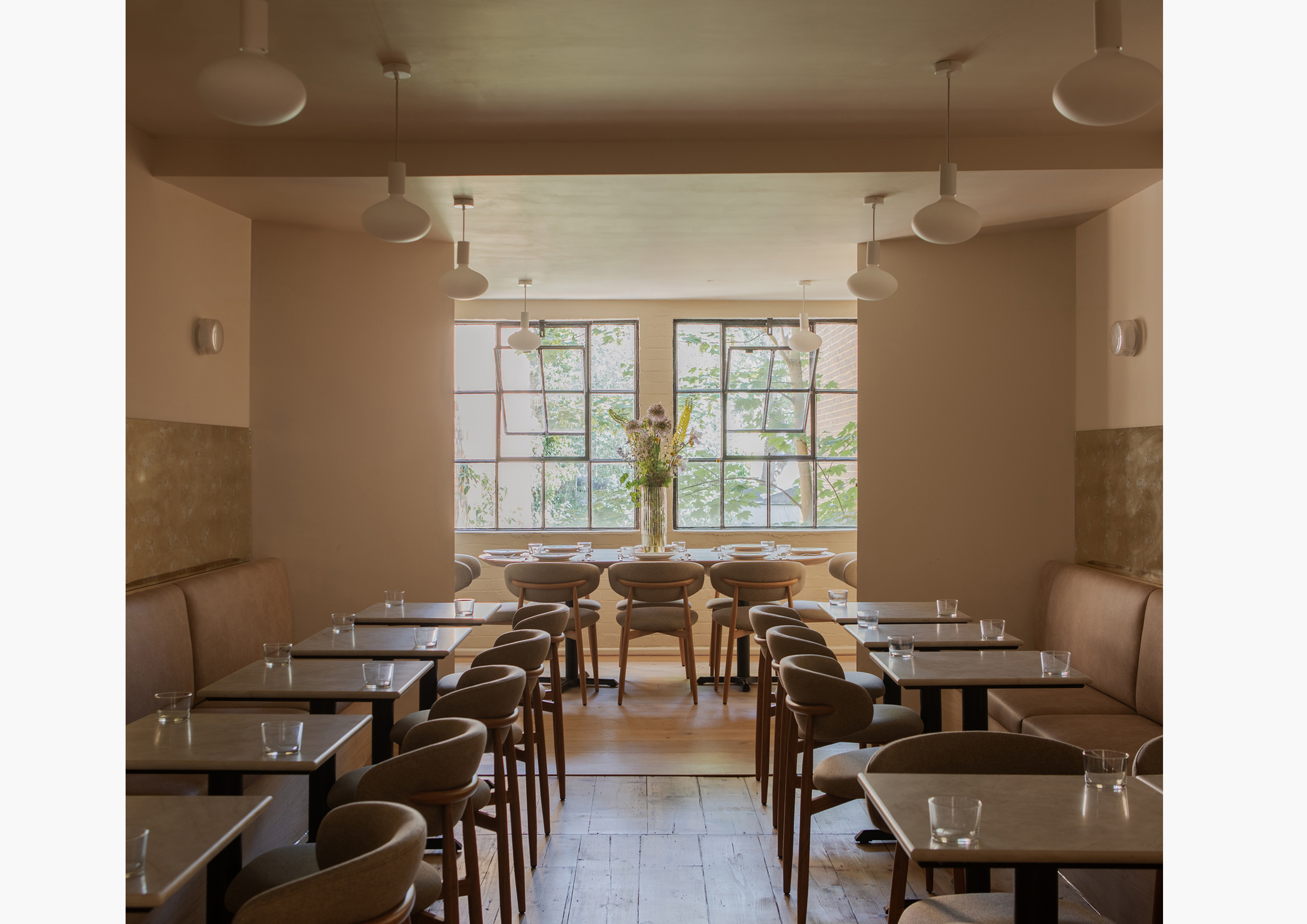
The result was a clear principle: restraint over statement. Rather than compensating for the scale of the unit with visual gesture, the practice built the interior around a tight, coherent material palette – warm plaster walls, bespoke oak joinery, stone-topped tables and curved upholstered seating. Nothing decorative that wasn’t also considered.
Designing with the building, not against it
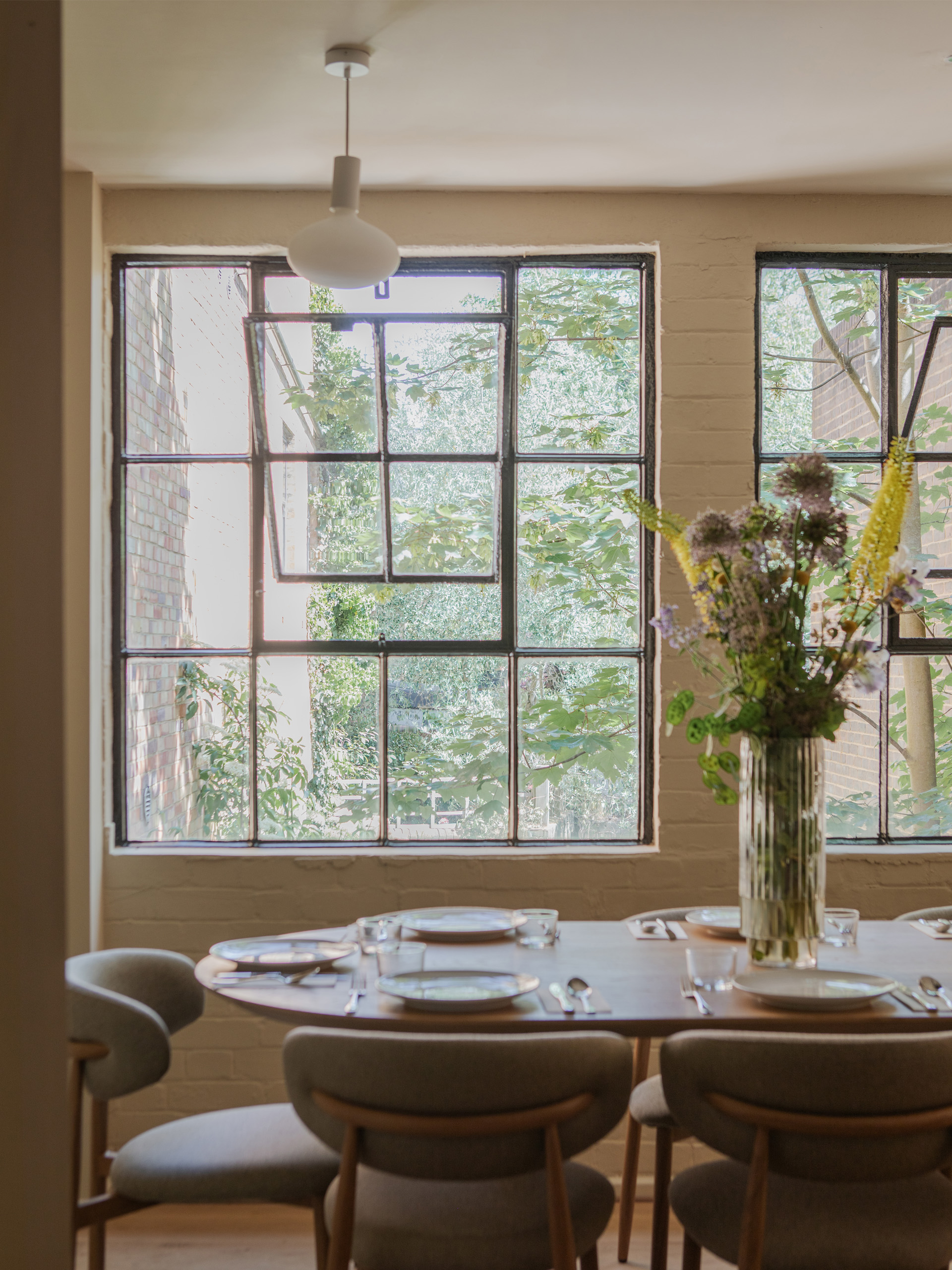
Crittall-style windows at both the street frontage and rear elevation were central to the spatial strategy. Rather than treating the unit’s size as a constraint to be hidden, Common Ground Workshop used the windows to draw natural light and the greenery of both Hampstead High Street and the rear courtyard deep into the interior — making the space feel generous without enlarging it.
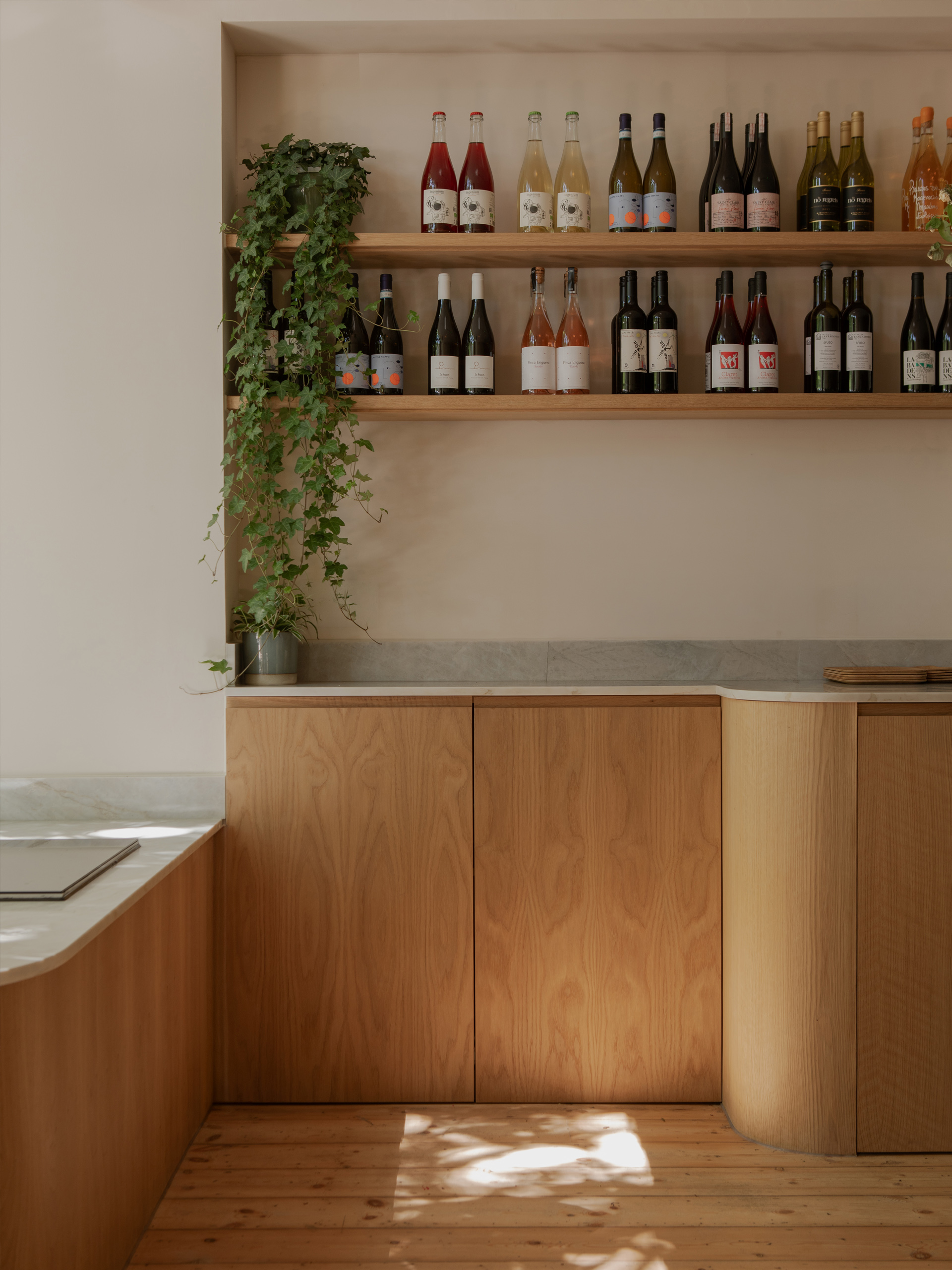
The retail offer was embedded into the architecture from the outset. Bespoke oak shelving, a ribbed service counter and a glass display case were designed as spatial elements first and commercial ones second. Natural wine and specialty coffee — the two retail anchors for Culinary Grace — read as part of the same interior language as the dining room beyond.
Seasonal botanical arrangements, specified as part of the design brief rather than the styling, complete the connection between interior and exterior. At Gracie’s, the outside is always present.
What this project demonstrates
Common Ground Workshop specialises in hospitality spaces that have been told they don’t work — units that are too small, too awkward, or too constrained to support the brief a client actually wants to deliver. Gracie’s Hampstead is evidence that the constraint is rarely the issue. A challenging unit is rarely a design problem. It’s usually a briefing calibration.
Gracie’s Hampstead is now open at 29 Hampstead High Street, London
See the project:
https://www.commongroundworkshop.co.uk/project/gracies-hampstead-restaurant-cafe-bar-design/